A Guided Candlelit Labyrinth Walk

A labyrinth is a special kind of mindfulness meditation, and if we don’t have access to an actual labyrinth, we can still walk on one by connecting with a labyrinth in our minds.

For the next few minutes, we’re going to go on an imaginary walk through a labyrinth, either as preparation for taking an actual walk afterwards or, if that’s not an option for you, as a labyrinth walk in your heart and mind, complete on its own. Remember, there is no set ritual for walking a labyrinth, and every labyrinth walk, real or imagined, is uniquely meaningful.  

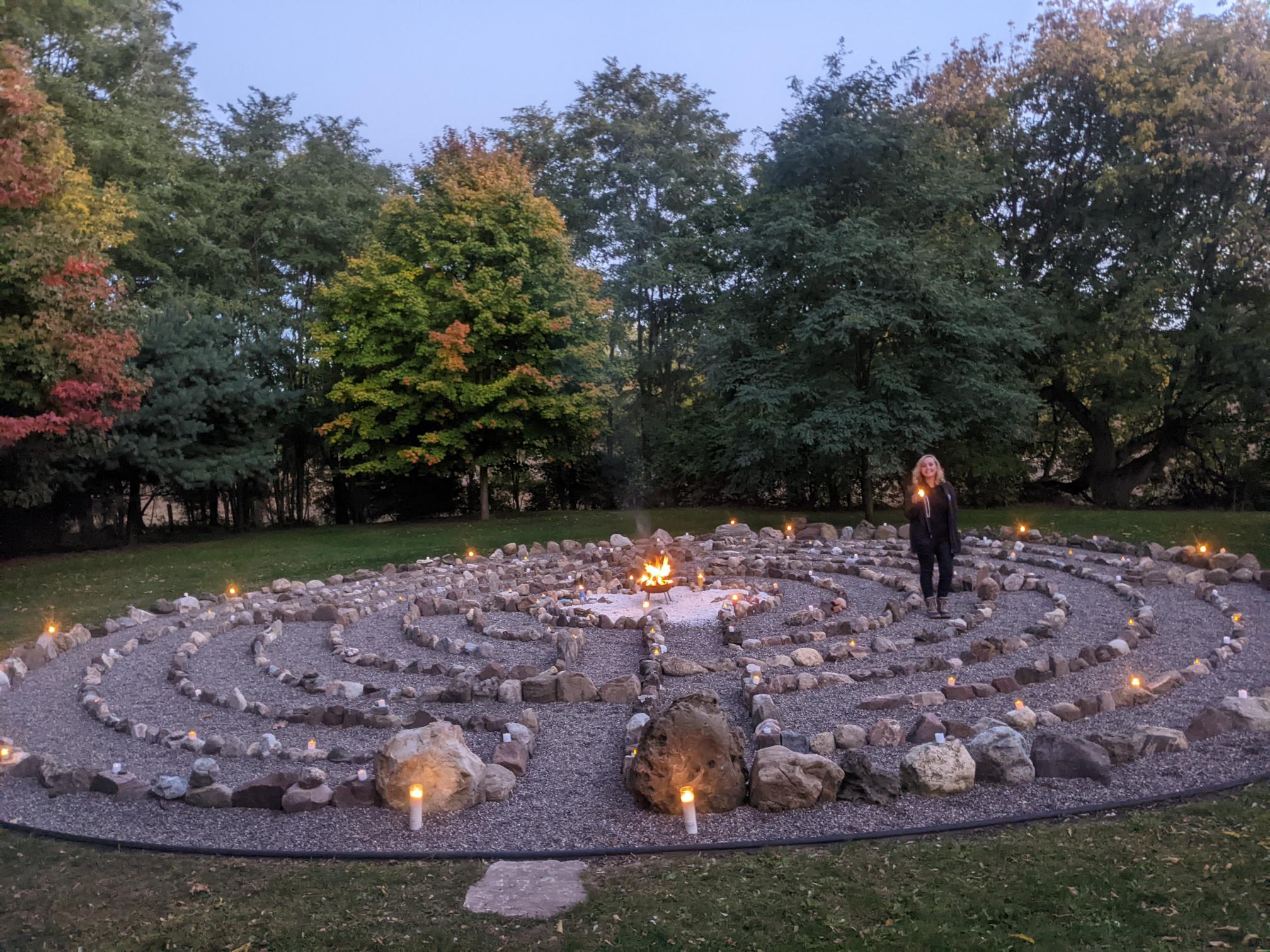
So close your eyes if that feels comfortable to you or take a soft gaze. In your mind’s eye, approach the labyrinth, taking in its appearance and style, admiring its unique craftsmanship, until you find yourself standing at its entrance. As you stand on the flat threshold rock before the entrance of the labyrinth, see yourself holding a candle in your hands, its flame bright like the light of a full moon or flickering like a lightning bug or dark, waiting for just the right time for you to light its wick. 

You decide how your candle looks and what it means to you. Maybe the candle represents your intention for walking the labyrinth tonight, or maybe it signifies something you’re carrying that you’d like to set down or something you’d like to burn away from your life or even something you’d like to burn brighter in your world. Just as we have the capacity to choose our perspective, it’s up to each one of us to decide how and why we’re going on this labyrinth walk and what this candle means to us.  (PAUSE)  

Calmly, clear your mind of thoughts and worries, or, if that’s not possible for you right now, simply observe and accept your concerns. You can also choose to bring to mind a prayer or a spiritual question to contemplate during the walk to the center. (PAUSE)  

Once you’re ready, enter the labyrinth slowly, with awareness. Take your first step, carrying your candle with you. Take another step, and another, and another. When you walk the labyrinth, open your senses and focus on the process of taking slow and deliberate steps. Maybe the candle lights your way or maybe it waits in darkness for you to ignite it. 

When you reach the end of a row or a curve, mindfully turn and begin moving in the new direction indicated, one foot in front of the other. Every single step leads to the center, so you can never get lost. Each turn can be a release or a realization, a sign or an obstacle. You decide how to approach each new direction, perhaps as a meaningful ritual or simply as another turn in the path of our desire to find the center. 

As you walk, you may feel called to place your candle on a particular stone on the way in or maybe you find yourself clutching it carefully, waiting for the right moment to let it go or light it up.Continue walking slowly and mindfully, one step in front of the other, trusting this is the right path for you right now.       

Reaching the center, step into its circle or rose and feel the energies infused there by every labyrinth everywhere. Pause to reflect or pray or meditate or do whatever it is you feel called to do. In this sacred space, you are now ready to give or receive or co-create what the labyrinth, and your true center, have to offer you. Perhaps listen quietly for an answer, an insight, or a profound revelation, or maybe leave something in the center and release your attachment to it. 

What will it be this time? What is your time in the center of this labyrinth gifting you? Is this where you leave your candle? (PAUSE)

Spend as much or as little time as you need in the center of the labyrinth, and when you feel complete and satisfied, turn and face the way out. Before you leave, check in with yourself by connecting with your heart, your mind, your gut, and your body as a whole. How do you feel? Lighter? Clearer? Grateful? Renewed? Recognize and accept however it is you’re feeling with self-love and compassion. (PAUSE)

Now, as we take our first step out of the center, we begin the return journey back towards our regular lives. Take slow and mindful steps, one after the other, as you make your way back, traveling the same path on which we just journeyed in. Pause and breathe as you walk back toward reality. Reflect a little further. Maybe blow out your candle as you pass it, or maybe leave it burning behind you. Keep walking mindfully turn after turn after turn.    

As you reach the exit and step out onto the threshold rock, turn and face the labyrinth one last time. Reflect on the experience of walking this labyrinth, this time, and how you may be different now than when you stood on this rock before entering. 

In your mind’s eye or in the here and now if you feel so moved, place your hands together at your heart’s center, and bow respectfully to the labyrinth, thanking it for its insights and wisdom. Take three long breaths before connecting again to your surroundings: in through the nose and out through the mouth, in and out, and one last time in and out together. 

Now, imagine stepping off the rock and leaving the labyrinth behind you. Slowly open up your eyes, and return to our space.

Author: Terry Shamblin

Love in Small Gestures

The quick text

A call on the drive

Passing comments


Acknowledgement

I see you

I’m thankful for you


The inner voice that says

Reach out

Connect

Let them know


Small quiet moments

Whispers in the busyness of life

Distractions and to-do lists can drown them out


Slowly I’m realizing to pause

Embrace stillness

Go inward and listen to the voice of love


Author: Renee Dimino

Awareness

Photo by Singkham on Pexels.com

When I was learning how to meditate, I exposed myself to a variety of teachers, gravitating towards the works of Drs. Joe Dispenza, Tara Brach, Deepak Chopra, and Jack Kornfield in particular. Through their books, podcasts, and online courses, I practiced using anchors and breathwork, postures and mantras, but some of the more sophisticated concepts, such as awareness, escaped me at the time.

As a novice, I picked up on their basic teachings that our witnessing awareness is what’s left when we look beyond our roles, that awareness is a sense of spaciousness and graciousness and being aware of being aware. I easily accepted—perhaps because I experienced it—how our awareness is a place of silence and refuge in which we can find momentary rest, but, at that time, I don’t think I was ready for the more nuanced understandings that come with a deepening and expanding daily practice.

Now, as a certified meditation teacher who practices multiple times a day, I know I’m always going to be a student as well; when I look at states of being like awareness more closely, I realize—again and again—the more I know, the more I know I don’t know. Awareness may be the precursor to change, yet I’m now fully aware I’ll never “arrive” at some imagined pinnacle and consistently become more like a guru and less like a human.

The practice is the pinnacle, and compassion for everyone’s humanity, especially our own, is the gift awareness brings.           

When we surrender to awareness, according to Dr. Joe Dispenza, we get out of our own way, our senses effortlessly become more acute, and we open up to infinite possibilities. Then, he goes on to claim, by remaining aware and experiencing the elevated emotions that match our desired outcomes, we prevent ourselves from reverting back to our old ways of being and move forward toward a future of our own creation.

Avoiding “the trance of unworthiness” Tara Brach warns against comes to mind for me here as does her steadfast belief that the wholeness of our being rests in awareness since it’s the “source of our love, wisdom, and creativity.” She calls it “the gold, the sacred essence of our life.” According to Jack Kornfield, this awareness exists only when we trust in the present; it can’t be found in our thoughts, personalities, past experiences that brought us to today, or in our hopes and dreams for the future. 

Sometimes, we can and do turn our awareness off, so Deepak Chopra offers the following warning signs to help us become aware of those times we’re not being aware: letting others take charge, acting unconsciously, feeling emotionally trapped, isolating ourselves, acting passively or resigned in the face of what makes us unhappy, or following rote habits and behaviors. And he offers a solution too: becoming more self-aware by tuning into our inner worlds, listening to the messages our bodies and our minds are giving to us, and then proceeding with mindful awareness.

To practice mindfulness, Jack Kornfield says, is to pay attention in a state of non-judging, respectful awareness. To become aware, we must first acknowledge what’s there with kindness and compassion without identifying with it. Tara Brach’s RAIN practice, wherein we recognize, allow, investigate, and nurture, is a wonderful tool for developing our mindful awareness. Other strategies for deepening awareness include paying attention, staying in the present moment, witnessing, befriending what’s there, refraining from judgment, and noticing our thoughts, words, and deeds.

Although we have these and other strategies, awareness may be as simple as this: we become more aware not by striving to be aware but by actually just being aware.        

Author: Terry Shamblin

Acceptance

Allowing things to be as they are


Reminding myself I can . . .

Pause

Breathe

Let go

Detach as needed


Slowing down

Slowing the inhale and exhale

Letting go of the planning and worry

Letting things unfold in their own time

Cultivating patience

Coming to stillness


Accepting myself . . .

My body in this moment

My mindset here and now

My current situation


Trusting my own wisdom

Accepting so I can listen to the soft still voice in my heart

Author: Renee Dimino

Striving Not to Strive

Photo by Emanuel Galvu00e3o on Pexels.com

While honoring my mother-in-law’s life last week, I found myself distracted by the arrangement of the room, especially the bottleneck at the photos preventing people from reaching the coffin. I desperately wanted to rearrange the funeral home for better flow, but I redirected myself to focus on connecting with the people in the room instead. Later, during the service, I couldn’t stop looking at this giant cobweb hanging from the ceiling; its lack of respect for her life offended me because she deserved nothing less than the best.

It was then I knew I was striving for perfection, again, and missing the message because of it, so I redirected myself and my attention again. And again. And again. Yes, these are hard habits to break, but noticing we’re striving without judging ourselves for it is mindfulness in action. Paradoxically, not introducing an attitude of where we should be will eventually move us closer to where we want to be.       

Before discovering mindfulness and meditation, I’d always oriented myself toward goals and strived to accomplish them. The closer to perfect the achievement or event turned out, the better I felt, which of course meant the opposite was also true. My feelings of self-worth were tied up in the judgments of myself and others, and because perfect is impossible, nothing was ever quite good enough, even if it was amazing. I constantly strived to make things better, to do things better, to be better.   

Yet, according to Jon Kabat-Zinn, mindfulness “transcends opposites,” and striving “undermines our ability to pay attention to what’s actually happening moment by moment.” Mindfulness and non-striving help us realize we already are, in some sense, whole and perfect and there is nothing to attain, Kabat-Zinn tells us in Full Catastrophe Living. It means “to live in accordance with the way things are, to come into harmony with all things and all moments.”

We can’t strive our way into a state of non-striving. The spirit of non-striving, he says, is to befriend the current situation as it is, and ironically, this kind of non-action eventually leads to greater attainment of our goals and desired states of being because they come naturally through our practices and cannot be forced.

What practices does Kabat-Zinn recommend to help us become more non-striving without striving to do so? Mindfulness and meditative practices top the list because they will help us cultivate “a new way of seeing [ourselves], one in which [we] are trying less and being more.” Not introducing an attitude of where we should be and seeing and accepting things as they are prerequisites for change. He says completing body scans, yogic and other body practices, as well as visualizations and imaginings for their own sakes as a way of being with our bodies will help us embody an attitude of non-striving, and not trying to achieve anything beyond awareness and acceptance may even lead to wisdom.

Jon Kabat-Zinn isn’t saying we should never try or act, but rather that shouldn’t be our main focus as we explore non-striving and self-acceptance as ways of being. He says, “There is a lot [we] can do to gently, lovingly, and firmly—through non-striving and non-doing, coupled with doing when taking action with awareness is called for—influence how things unfold across the lifespan.”   

How do you embody an attitude of non-striving, and how has that helped you in your life? We’d love to hear from you.     

Author: Terry Shamblin

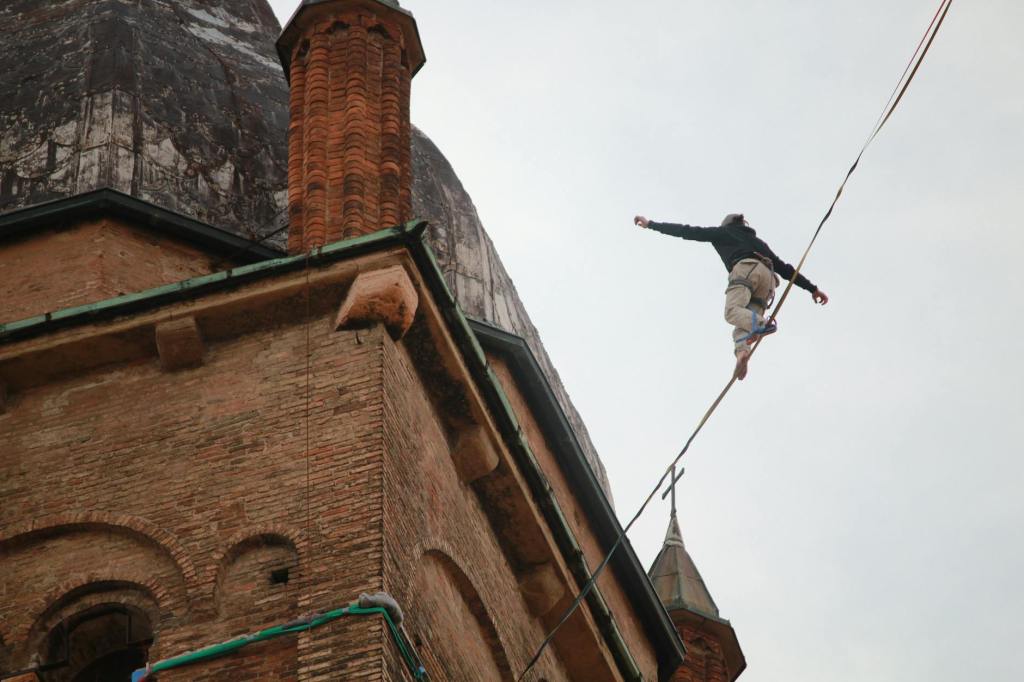
Who put me on this tightrope?

I used to ask, “Where is my soft space to land?”

After hectic days with meals prepped, heart-to-heart conversations, lost items found, tears dried, laundry folded, problems solved, hurt feelings soothed, schedules arranged and rearranged, and on and on – I sometimes felt tired and alone

Balancing family, work, social connections, health, errands, and all the demands while being careful with those I love – treating them with kindness and patience

Sometimes failing

Sometimes overwhelmed

Often my cup empty

I found the soft space to land in the sacred pause, in the breath, in embodied awareness, in meditation

I still stumble on the tightrope I’ve created but I know the net of mindfulness is there to catch me when I fall

Author: Renee Dimino

Wishes for Wisdom: A Gatha

Photo by Jean van der Meulen on Pexels.com
Wishes for Wisdom

May I consider individual perspectives while continuously deepening my own.
May I refrain from judgment and exhibit empathy and understanding.
May I practice deep listening and thoughtfully decide when and if to speak.
May I choose kind and compassionate words to share with myself and others.

May I set good intentions and align them with meaningful action.
May I learn from my experiences and apply those lessons to move forward.
May I reflect and reframe, being gracious to all people everywhere.
May I respond instead of react.

May I always be filled with wonder and awe.
May I be curious and interested in everyone I meet.
May I be grateful for what I have and generously share my gifts.
May I be thoughtful and caring, open and considerate.

May I pay attention to what’s important and let the rest go.
May I simplify my life, avoiding overcomplication and striving.
May I accept what is and not try to control what will be.
May I continue learning and growing.

May I make good decisions.
May I use my head to think while also honoring my heartfelt intuition.
May I be mindful of the effects I have on others.
May I be fully present and engaged with all that surrounds me.

Author: Terry Shamblin

Truth Metta Meditation

Get into a comfortable position. Sit quietly, mentally repeat the following phrases slowly, thinking about their heartfelt meaning with loving intention.

May I quiet my mind often to know my truth.

May I be nonjudgmentally honest with myself about who I am.

May I be open to the truths life is teaching me.

May I have self-compassion when the truth is difficult.

Breathing in, I seek my truth. Breathing out, I accept my truth.


Bring to mind someone you love, repeat the phrases toward them with loving intentionality.

May you find time and space to uncover your truth.

May you be nonjudgmentally honest with yourself about who you are.

May you be open to the truths life is teaching you.

May you have self-compassion when the truth is difficult.

Breathing in, I seek truth. Breathing out, I accept what is true.


Bring to mind someone you interact with but do not know really well, repeat the phrases toward them with loving intentionality.

May you find time and space to uncover your truth.

May you be nonjudgmentally honest with yourself about who you are.

May you be open to the truths life is teaching you.

May you have self-compassion when the truth is difficult.

Breathing in, I seek truth. Breathing out, I accept what is true.


Bring to mind someone who you have difficulty with, repeat the phrases toward them with loving intentionality. If this is difficult, consider sending the phases to yourself.

May you find time and space to uncover your truth.

May you be nonjudgmentally honest with yourself about who you are.

May you be open to the truths life is teaching you.

May you have self-compassion when the truth is difficult.

Breathing in, I seek truth. Breathing out, I accept what is true.


May I quiet my mind often to know my truth.

May I be nonjudgmentally honest with myself about who I am.

May I be open to the truths life is teaching me.

May I have self-compassion when the truth is difficult.

Breathing in, I seek my truth. Breathing out, I accept my truth.

Author: Renee Dimino

Affirmations and Intentions for Flow

Photo by Max Andrey on Pexels.com

I flow through life with grace and ease.

Flow is my natural state of being.

I flow along life’s rivers, enjoying every current and shore.

When I am fully present, engrossed in the task, and engaged with the process, time expands for me.

May I flow like my breath, without effort or pretense.

May I flow like air over a mountaintop, cool and uplifted.

May I enter into flow without expectation, light-hearted and grateful.

May we all experience states of flow rich with the inspired focus, action, and synergy to realize our dreams.

Author: Terry Shamblin

Lessons Learned at Locust Grove Labyrinth

pxl_20240721_1639162994882667681313609311

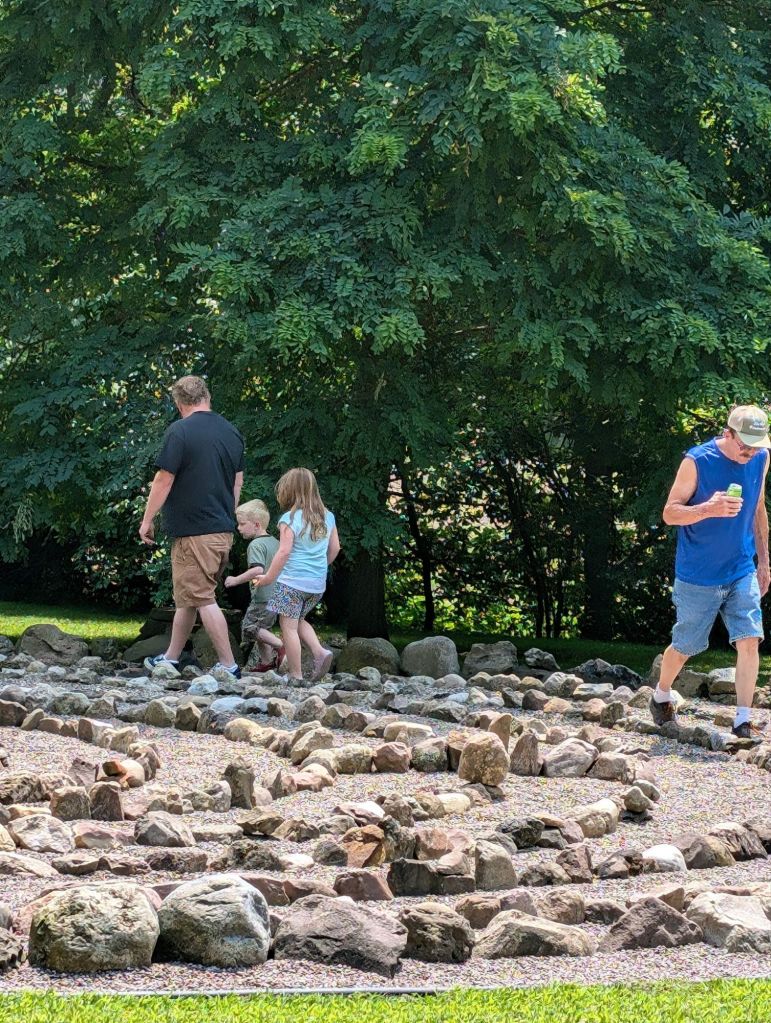
Our labyrinth at Locust Grove still feels as sacred and supportive to me today as it did on the day we summoned the powerful energies of all labyrinths everywhere to imbue its bright center and dedicated its graveled paths to serving the highest good of all who walk them. Over the past three years, many have sought out its solace for meditation, contemplation, creativity, stress, gratitude, grief, insight, lovingkindness, ritual, release, and more and come away realizing that every walk helps the walker in its own way.

Because our interactions with the labyrinth are metaphors for life, each unique experience—from building it to walking it to tending it—imparts information related to our intentions, especially when we remain open enough to receive this wisdom.

Drawn from our conversations with walkers, as well as guestbook and journal entries, here is just a small sampling of some of life lessons learned at Locust Grove Labyrinth:

  • Just as every rock has its place, every person belongs and is an important part of this world—and theirs.
  • Each individual rock matters, for it contributes to the beauty of this place and does its part in creating a path to keep others from losing their way.   
  • We all walk the same path.
  • There is room for all of us, even if we have to adjust our pace or pass respectfully as we head in different directions.   
  • There are always juxtapositions: As the rare whine of the leaf blower gives way to blessed beauty and lasting silence, so too can the occasional disagreement clear a path and make it easier to walk. 
  • We really can’t get lost.  
  • Every turn provides a different viewpoint.
  • There is freedom in form.
  • The end always comes quicker than we think it will, so don’t rush. Enjoy the journey!   
  • Silence speaks the loudest: Remember to listen.   
  • The center is always within sight.
  • Because all paths lead there, visiting our center is essential to a purposeful life.
  • We have myriad types of centers—spiritual, emotional, moral, familial, and more—so we can’t expect to attend to all of them to the same degree at the same time.  
  • Sometimes we move closer to or farther away from our centers, but our hearts are always ready to make room for ourselves and others. 
  • We don’t have to carry anything with us we don’t want to carry. We can always leave it behind and walk away.
  • Our steps are choices, and our choices are steps. Can we choose the ones leading to where we want to go?  
  • We always have a choice:  Are we taking the same path back out or are we taking the shortcut?    
  • Rocks—and people—weather over time.
  • Whether or not we feel we can weather the weather, sometimes we have to do just that.
  • We always have a choice: Can we wash off the algae or step out of the rain? Or, is it best to accept this particular condition right now?
  • Regularly paying attention will keep weeds from establishing: It’s far easier to pull things out before they take root.      

Sometimes, when I walk the labyrinth, I pick up fragments of white rock—bright against the dark paths—and return them to its center. I remember how I can always center myself. Sometimes, when I walk the labyrinth, I find myself distracted by the responsibility of its maintenance and lose sight of my original intention. I know I can always start again. Sometimes, when I walk the labyrinth, I hear the wind and listen for the message it has for me.  Everything means something. Sometimes, when I walk the labyrinth, faulty perspectives dissolve, insights appear, and I’m overwhelmed with gratitude for this sacred space.   

Have you had an impactful labyrinth experience?  We’d love to hear from you!   

Author: Terry Shamblin